News
French Banks Shut Out Le Pen’s Party as 2027 Election Looms
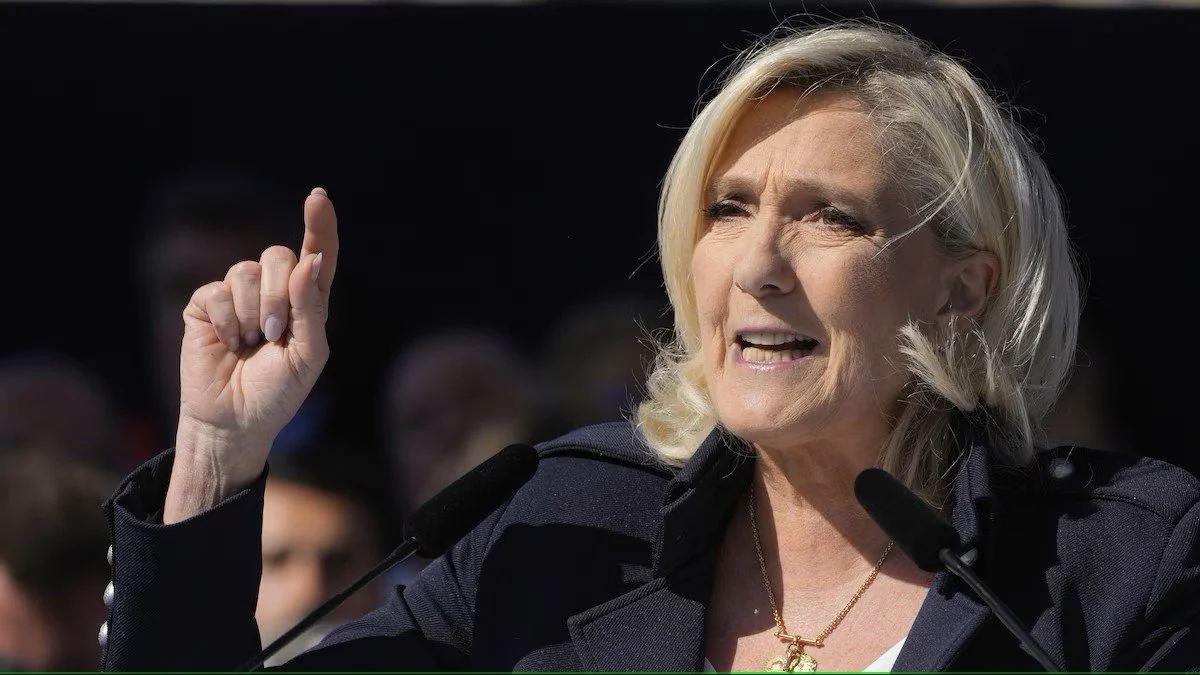
Marine Le Pen’s National Rally (RN) says it has been unable to secure a loan from any French bank to finance its campaign for the 2027 presidential election—despite the party leading early opinion polls.
RN president Jordan Bardella revealed the setback on Saturday, August 29, saying no French bank had so far agreed to provide the party with the financing it needs.
“As I speak to you, no French bank has responded favourably,” Bardella told BFMTV during a visit to an agricultural fair in Châlons-en-Champagne.
He called the situation a serious concern for French democracy, arguing that a party currently leading the presidential race should be able to access domestic campaign financing.
“We continue to look for a loan, in France or elsewhere in Europe,” Bardella said, adding that he hoped a solution would eventually be found.
RN Seeking €10.7 Million
National Rally is reportedly seeking around €10.7 million to help fund its 2027 presidential campaign.
France has strict rules governing political financing. Individual donations are capped, while private loans face significant restrictions during presidential elections.
That leaves political parties heavily dependent on banks to provide the money needed to cover campaign costs upfront.
The French state can later reimburse eligible campaign expenses, but candidates generally need to receive at least 5% of the vote and have their campaign accounts approved by the relevant watchdog.
RN is widely expected to pass that threshold.
Bardella also pointed to other presidential hopefuls, including centre-right politician Édouard Philippe, who have reportedly obtained loans from French banks.
He urged lenders to “act responsibly.”
A Problem RN Has Faced Before
The financing crisis is not new for Marine Le Pen’s party.
In 2014, RN obtained a loan of roughly €9 million from a Russian-linked bank after struggling to secure financing from French lenders.
Ahead of the 2022 presidential election, the party again turned abroad, obtaining a similar-sized loan from a Hungarian bank.
Foreign financing has since come under increased political and regulatory scrutiny in France, making another overseas solution potentially more complicated.
Why Are French Banks Hesitating?
French banking representatives have stressed that political loans are assessed according to financial risk rather than political affiliation.
One concern is what happens if a candidate fails to reach the 5% threshold required for state reimbursement.
Banks also face the possibility that campaign accounts could later be rejected, leaving them exposed to significant losses.
Reputational and governance concerns may also be influencing decisions.
Marine Le Pen’s conviction on appeal in July 2026 in the European parliamentary assistants affair has added another complication for financial institutions considering whether to lend to the party.
RN, however, has repeatedly argued that banks are using financial decisions to discriminate against the party for political reasons.
French Government Steps In
The dispute has become serious enough to attract government attention.
Prime Minister Sébastien Lecornu’s office reportedly held discussions with major French banks in July about finding ways for presidential candidates—including RN representatives—to obtain domestic financing.
Among the ideas being considered are a banking consortium and partial state guarantees that could reduce the financial risk for lenders.
France’s banking lobby has also called for state-backed risk-sharing mechanisms for presidential campaign loans.
The issue presents the government with a delicate balancing act: ensuring political parties have fair access to financing while preventing public money from unnecessarily absorbing private-sector risk.
Le Pen Leads the Early Race
The financing dispute comes as National Rally enters the 2027 presidential race from a position of strength.
An ELABE poll published around the same period placed Marine Le Pen at roughly 34–35.5% in first-round voting intentions.
Édouard Philippe followed with approximately 17–20.5%, while Jean-Luc Mélenchon was around 14–14.5%.
France is scheduled to hold the first round of its presidential election in April 2027.
For RN, however, the immediate challenge is not only winning votes—it is finding the money to run the campaign.
The party’s struggle to obtain a French bank loan has once again exposed a fundamental tension in France’s political financing system: private money is tightly restricted, but political campaigns still need commercial credit to operate.
With the election approaching, National Rally is now searching for a financial solution in France—or potentially elsewhere in Europe.