Entertainment
Duane “Keffe D” Davis Found Guilty in Tupac Shakur Murder Case After Nearly 30 Year
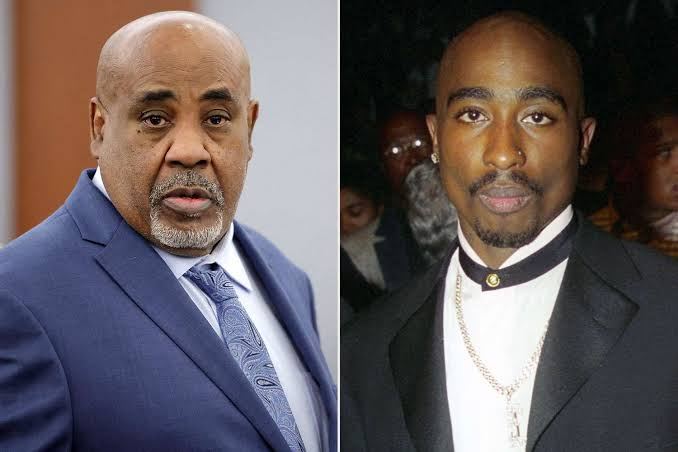
Duane “Keffe D” Davis has been convicted in the murder of Tupac Shakur, bringing a major development to one of hip-hop’s most notorious unsolved cases nearly three decades after the rapper was killed.
A Las Vegas jury found the 63-year-old former South Side Compton Crips leader guilty on August 31, 2026, of first-degree murder with use of a deadly weapon and a gang enhancement in connection with the September 1996 drive-by shooting that claimed Tupac Shakur’s life.
The conviction marks the first time anyone has been found guilty in connection with Tupac Shakur’s murder.
Davis faces a potential sentence of life in prison. His sentencing will take place at a later date.
Duane “Keffe D” Davis Convicted in Tupac Shakur Murder
The verdict followed roughly three hours of jury deliberations after a trial that lasted approximately two weeks.
Prosecutors argued that Davis was the person who orchestrated the retaliatory attack following an altercation involving Tupac and Davis’s nephew, Orlando “Baby Lane” Anderson.
Although prosecutors did not allege that Davis personally fired the shots, they argued that he played a central role in organizing the attack.
Under Nevada law, a person who aids, abets or orchestrates a killing can be held responsible as a principal.
Davis’s defense disputed the prosecution’s case, arguing that his past accounts of the shooting were exaggerated or fabricated for attention and financial gain. His lawyers also emphasized the lack of physical evidence directly connecting Davis to the shooting or establishing that he possessed the murder weapon.
What Happened to Tupac Shakur in Las Vegas?
Tupac Shakur was 25 years old when he was fatally shot in Las Vegas on September 7, 1996.
Earlier that night, Shakur had attended the highly anticipated Mike Tyson vs. Bruce Seldon boxing match at the MGM Grand.
Following the fight, a confrontation broke out inside the casino involving Shakur, Death Row Records co-founder Marion “Suge” Knight and others.
During the altercation, Shakur and members of his entourage assaulted Orlando “Baby Lane” Anderson, who was Davis’s nephew and a member of the South Side Compton Crips.
Hours later, Shakur was riding in a black BMW driven by Knight near the intersection of Flamingo Road and Koval Lane.
A white Cadillac pulled alongside the BMW.
Gunfire followed.
Shakur was struck multiple times. He was taken to University Medical Center, where he died six days later.
Knight was also wounded in the shooting but survived.
Prosecutors Say Tupac’s Murder Was a Retaliation Attack
According to prosecutors, Davis was angered by the assault on his nephew and helped organize the shooting as an act of retaliation.
Prosecutors said Davis obtained a .40-caliber Glock and directed the men inside the Cadillac as the group carried out the attack.
The shooting occurred against the backdrop of the intense rivalry between rival Los Angeles street gangs and the broader East Coast–West Coast conflict that dominated hip-hop culture during the 1990s.
The three other men prosecutors alleged were inside the Cadillac with Davis—including Anderson—have since died.
How the Tupac Murder Case Was Finally Revived
For decades, Tupac Shakur’s murder remained one of the most famous unsolved cases in music history.
The investigation was hampered by conflicting accounts, reluctant witnesses and the complicated gang and music-industry tensions surrounding the shooting.
Davis, however, had long been associated with the investigation.
What ultimately helped revive the case was Davis’s own public statements.
In a 2008 proffer interview with law enforcement, as well as later interviews, documentaries, podcasts and his 2019 memoir Compton Street Legend, Davis discussed his alleged involvement in the events surrounding Shakur’s killing.
Prosecutors used those statements as a central part of their case, arguing that Davis repeatedly described his role in the attack and identified himself as the decision-maker.
Davis later disputed those accounts, saying he had exaggerated or fabricated elements of his stories for money and publicity.
Duane Davis Arrested in 2023
Davis was arrested in September 2023 following a grand jury indictment.
The indictment represented a historic moment in the investigation because it marked the first formal criminal charges filed in Tupac Shakur’s killing.
Davis pleaded not guilty and remained in custody while awaiting trial.
He was also separately convicted of battery following a jailhouse fight and received a sentence of 16 to 40 months.
What the Conviction Means for Tupac’s Murder
The conviction brings a significant chapter to a case that has generated countless theories, documentaries, books and investigations for nearly 30 years.
However, Davis’s conviction does not establish who physically pulled the trigger.
Instead, prosecutors successfully argued that Davis could be held criminally responsible for the killing because of his alleged role in organizing and facilitating the attack.
Tupac Shakur remains one of the most influential figures in hip-hop history. His music combined introspective songwriting with politically charged themes and confrontational rap, helping make him one of the defining artists of his generation.
His death in 1996, followed by the 1997 murder of The Notorious B.I.G., became closely associated with the violent East Coast–West Coast rivalry that surrounded hip-hop at the time.
A Historic Verdict Nearly 30 Years Later
The guilty verdict against Duane “Keffe D” Davis represents the first formal conviction connected to Tupac Shakur’s murder.
For decades, the question of who was responsible for Tupac’s death remained one of music’s biggest mysteries.
The case ultimately turned on a striking element: Davis’s own words.
His repeated public accounts, prosecutors argued, helped transform a decades-old mystery into a criminal prosecution.
While questions about the exact sequence of events—and the identity of the person who fired the fatal shots—may remain, the verdict provides the first major judicial finding of responsibility in the murder of one of hip-hop’s most enduring icons